What Happens at the End of a Novated Lease? Your Residual Payment Options
TL;DR
A novated lease and buying outright get you the same car, just paid for differently. Buying outright uses cash or a loan you repay entirely from after-tax money. A novated lease is paid mostly from pre-tax salary, and because eligible EVs are exempt from FBT, almost none of that pre-tax benefit gets clawed back. Run the numbers, and that difference is usually worth thousands over a typical lease term, even after you account for the balloon payment owed at the end.
"Just buy it outright" is common advice, and for a regular petrol car it's often right, since a novated lease on an ordinary car still gets hit with FBT and the pre-tax advantage shrinks a lot. EVs are the exception, because the FBT exemption changes the maths substantially. Here's an actual worked comparison, not just the general theory.
The three ways to pay for the same car
There are really three options on the table, and it's worth being precise about what each one means:
- Cash purchase: you pay the full price upfront from savings, and running costs come out of your take-home pay as you go. You own the car outright from day one.
- Personal or car loan: you borrow the purchase price and repay it, with interest, entirely from after-tax income. No pre-tax benefit applies at all, this is just normal borrowing.
- Novated lease: your employer leases the car and pays for it (plus running costs) largely from your pre-tax salary, with a residual value left owing at the end of the term to actually own the car.
Why the FBT exemption changes the outcome
Normally, an employer-provided car triggers Fringe Benefits Tax, and that cost typically gets passed back to you as a post-tax contribution, cancelling out most of the pre-tax advantage. Eligible EVs are exempt from FBT entirely under the current rules, so that clawback mostly disappears. Almost the whole cost of the car and its running costs can come out of pre-tax salary instead, which lowers your taxable income and your income tax bill in a way that buying with cash or a loan simply can't. We've covered how the exemption works in more detail if you want the full mechanics.
A worked example
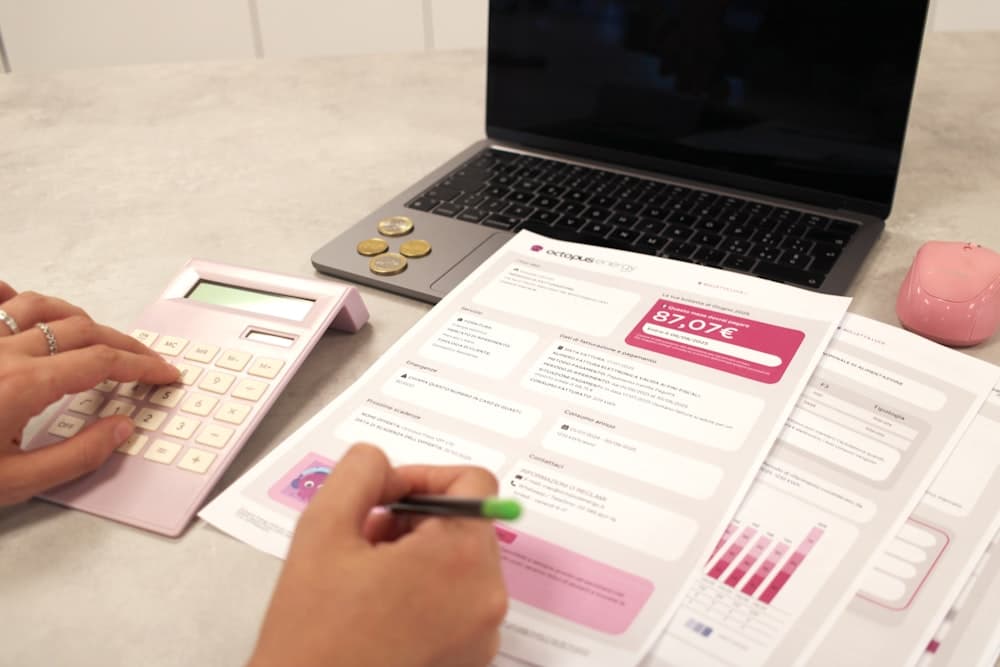
Take a $55,000 eligible EV (drive-away), a $110,000 salary, a 5-year term, and today's full FBT exemption. These figures come from the calculator on this site, with its standard assumptions: no deposit, a 7.5% lease interest rate and running costs estimated from the car's price. Here's what each path actually costs to end up owning that car:
- Cash purchase: $55,000 upfront, plus roughly $16,000 in running costs over 5 years paid from after-tax pay, for a total of about $71,000. You own the car immediately.
- Personal loan at 9% p.a.: around $13,700 a year in loan repayments plus running costs, repaid entirely after-tax, totals to roughly $84,500 over 5 years before the car is fully yours.
- Novated lease: the finance, running costs and a typical provider fee net out to about $8,900 a year once the tax and GST savings are factored in, or roughly $44,500 over the term. Add the residual value owing at the end of a 5-year lease, around $15,600 on this car, and the all-in cost to fully own it comes to about $60,100.
On these numbers, the novated lease comes out roughly $10,900 cheaper than paying cash, and around $24,400 cheaper than a personal loan, to end up owning exactly the same car. The gap gets wider the higher your marginal tax rate, since the pre-tax saving scales with your income, and it gets wider still the more expensive the car, since the exemption applies to every dollar of an eligible EV's price. Try your own salary and vehicle in to see your figure.
What buying outright still has going for it
The comparison isn't one-sided. Cash and loan purchases have real advantages a novated lease doesn't:
- No residual to find at the end. A cash buyer owns the car outright immediately; a loan buyer owns it once the loan is repaid. A novated lease leaves a lump sum (the residual) still owing at the end of the term, which you pay out, refinance, or trade in against.
- No dependency on your employer. A novated lease runs through your employer's salary packaging arrangement. Change jobs and the lease typically needs to transfer to your new employer or be paid out, which cash and loan purchases never have to deal with.
- No commitment to a fixed term. You can sell a car you own outright whenever you like. Exiting a novated lease early usually comes with a payout figure and admin, since it's a fixed-term finance product.
None of that outweighs the tax maths above for most people, but it's the honest trade-off. In this example the novated lease comes out cheaper on total cost and buying outright wins on flexibility and simplicity. Your salary, car, rate and term decide which way it goes for you.
The exemption is time-limited
The numbers above assume you're signing under today's full exemption. The government announced on 5 May 2026 that from 1 April 2027, an EV priced over $75,000 would get only a 25% discount on the FBT payable instead of the full exemption. It is not yet law, and leases already in place are not affected. This $55,000 example is under that cap, so the 2027 change leaves its numbers alone. The gap would only narrow under the announced Phase 3 from April 2029, when every eligible EV would drop to the 25% discount. If you're weighing up timing, our guide to when locking in before March 2027 is worth it walks through it, and what changes to the EV FBT exemption in 2027 covers exactly what changes and when.