What Happens at the End of a Novated Lease? Your Residual Payment Options
TL;DR
Yes, you can take out a novated lease on a hybrid, and the lease itself works the same way. What you do not get is the electric car FBT exemption. A hybrid pays FBT like any petrol car, so most of the lease has to come out of after-tax salary. On a $110,000 salary over five years, a $50,000 hybrid SUV costs about $58,900 in take-home pay, while a BYD Sealion 7 Premium at $59,350 costs about $47,400, even though the EV is more than $9,000 dearer to buy. The hybrid lease still saves you GST and bundles your running costs, which puts it about $5,500 ahead of a standard car loan over the term. The EV comes out about $26,600 ahead.
"Hybrid novated lease" is one of the more common searches that lands people here, and it usually means one of two things: someone wants a Toyota hybrid and wants to know what the lease costs, or someone is choosing between a hybrid and an EV and has heard the tax treatment differs. Both get answered below, with figures from the same calculator that runs every comparison on this site.
First, which kind of hybrid?
The word covers two very different cars for tax purposes.
- A conventional hybrid such as a RAV4 Hybrid, Corolla Hybrid or Camry Hybrid charges its own small battery from the petrol engine. It has never been eligible for the electric car FBT exemption. Nothing changed for these cars in 2025 or 2027.
- A plug-in hybrid has a bigger battery you charge from a socket. PHEVs were exempt until 1 April 2025 and are not any more, apart from leases already in place before that date. We covered that in are plug-in hybrids FBT exempt.
For a new lease signed today, the answer is the same either way: a hybrid is a petrol car as far as FBT is concerned. The rest of this post treats it that way.
What a hybrid novated lease looks like
A novated lease on a non-exempt car is not a bad deal. It is just a different deal from an exempt EV. Three things still work in your favour:
- GST. The lease provider claims the GST on the car's purchase price and on running costs, so you effectively pay the ex-GST price for the car and for fuel, tyres, servicing and insurance bundled into the lease.
- Bundled running costs. Everything comes out of one payroll deduction, which is convenience rather than tax, but people value it.
- Some pre-tax salary. Under the employee contribution method, which is how nearly every non-exempt lease is set up, you pay a post-tax contribution equal to the car's FBT taxable value, and whatever remains of the lease package comes out of pre-tax salary.
That last point is where the two cars diverge, so it is worth being precise about it. Under the statutory formula, the taxable value is 20% of the car's base value every year. The base value is the price before stamp duty and registration, about $45,600 for a car that costs $50,000 drive-away, so the taxable value is about $9,100 a year. On a lease package of about $13,000 a year, about $9,100 comes out after tax and only about $3,900 before tax. The pre-tax slice is what saves you income tax, and it is small.
An FBT-exempt EV has a taxable value of zero. The entire package comes out of pre-tax salary.
The numbers, side by side
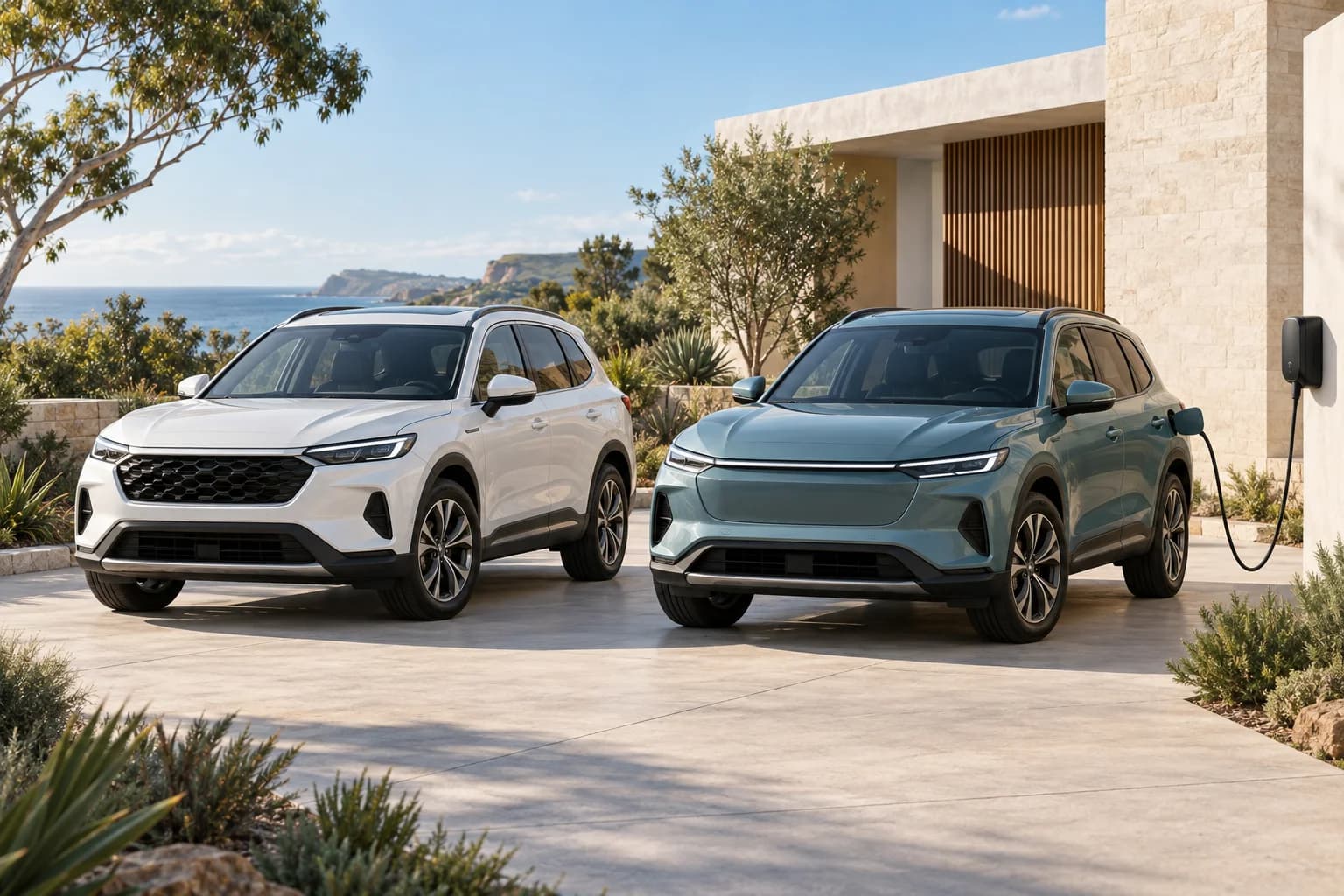
Every figure below uses the calculator's standard assumptions: a $110,000 salary, a five-year lease, no deposit, a 7.5% interest rate, and running costs estimated from the car's price. The hybrid is a round $50,000, a mid-size hybrid SUV drive-away figure rather than any one quote; swap in your own. The EVs are the catalogue's standard drive-away prices, checked in October 2026. They leave out BYD's current novated lease discount on the Sealion 7, which the calculator includes while it runs, so its live figures are a little lower.
| Hybrid SUV, $50,000 | BYD Sealion 7 Premium, $59,350 | Tesla Model Y RWD, $64,115 | |
|---|---|---|---|
| FBT-exempt | No | Yes | Yes |
| Annual lease package | $13,021 | $13,930 | $15,026 |
| Paid from pre-tax salary | $3,900 | $13,930 | $15,026 |
| Paid from post-tax salary | $9,120 | $0 | $0 |
| Income tax saved per year | $1,248 | $4,458 | $4,808 |
| Net annual cost to you | $11,773 | $9,473 | $10,218 |
| Five-year cost in take-home pay | $58,864 | $47,363 | $51,089 |
| Saving versus a standard car loan | $5,491 | $26,558 | $28,978 |
The Sealion 7 costs $9,350 more to buy and $11,501 less to own over the lease. The Model Y costs $14,115 more to buy and still comes out $7,774 ahead. That is the exemption doing its work: the EV's whole package is pre-tax, so its income tax saving is about three and a half times the hybrid's.
Two honest caveats on the table. The residual payment at the end of the lease is proportional to the car's price, so the dearer EV has a larger balloon, about $16,800 for the Sealion 7 against $14,200 for the hybrid. And the running-cost estimate is a percentage of price, so the EV's line includes more for tyres and insurance even though its energy cost is a fraction of the hybrid's. Both cut in different directions and neither closes an $11,500 gap.
Does salary change the answer?
Not the direction, only the size. The gap between a hybrid and an exempt EV grows with your marginal rate, because the exemption converts more of the package into pre-tax salary and every pre-tax dollar is worth more the higher your bracket.
| Salary | Hybrid, five years | Sealion 7, five years | EV advantage |
|---|---|---|---|
| $80,000 | $58,864 | $47,363 | $11,501 |
| $110,000 | $58,864 | $47,363 | $11,501 |
| $150,000 | $57,498 | $42,487 | $15,011 |
The $80,000 and $110,000 rows match because both salaries sit in the 30% bracket. At $150,000 the top slice of the package is taxed at 37%, and the EV pulls further ahead.
A $60,000 hybrid against a $60,000 EV
If the comparison is price for price, it is not close. A $60,000 hybrid costs about $68,800 in take-home pay over five years. A $60,000 exempt EV costs about $47,800. The $21,000 difference is almost entirely tax.
When a hybrid lease is still the right call
There are real reasons to lease a hybrid anyway, and they have nothing to do with the tax.
- You cannot charge at home and do not want to plan around public charging. Note that an EV relying on fast chargers can cost more to fuel than an efficient hybrid.
- You tow, or you regularly drive distances that would need a charging stop.
- The hybrid you want is well under the EV you would otherwise consider, and the price gap is bigger than the tax gap. Run it through the calculator rather than assume.
- Your employer's provider does not offer the EV you want, which happens more than it should.
If any of those is you, a hybrid lease still saves the GST and bundles the costs, and it is a perfectly reasonable way to buy the car. It just does not deliver the headline saving people associate with novated leasing, because that saving belongs to the exemption, and the exemption belongs to EVs.
One more thing about timing
The government announced on 5 May 2026 that the exemption for EVs will change from 1 April 2027. It is not yet law, and leases already in place are not affected. EVs with a list price of $75,000 or less would keep the full exemption. EVs above that would get only a 25% discount on the FBT payable. Hybrids stay where they are. Both EVs compared above have list prices under $75,000, so the 2027 change makes no difference to them. Their next date is April 2029, when the announced Phase 3 would bring every eligible EV down to the 25% discount. If the EV you are weighing up is over $75,000 and the decision is a close one, locking in before the deadline keeps the full exemption for the life of the lease.
Compare the actual cars you are choosing between in the : pick an EV from the catalogue, then enter the hybrid's drive-away price as a non-electric car and the same salary and term. This is general information, not tax or financial advice, and your lease provider's quote will differ with interest rate, fees and the running costs you actually bundle.
Illustrative stock photography. Photos: Ido l and Bestami Sarıkaya, used under the Unsplash License.